
Single, double, consolation
Pick the format when you build the event. Consolation rounds keep every team playing all day.
No implementation call. No onboarding queue. You set the fields and the format, and the event is ready to take registrations today.
30 to 80 games across 3 to 8 fields. One weekend, no recovery window.
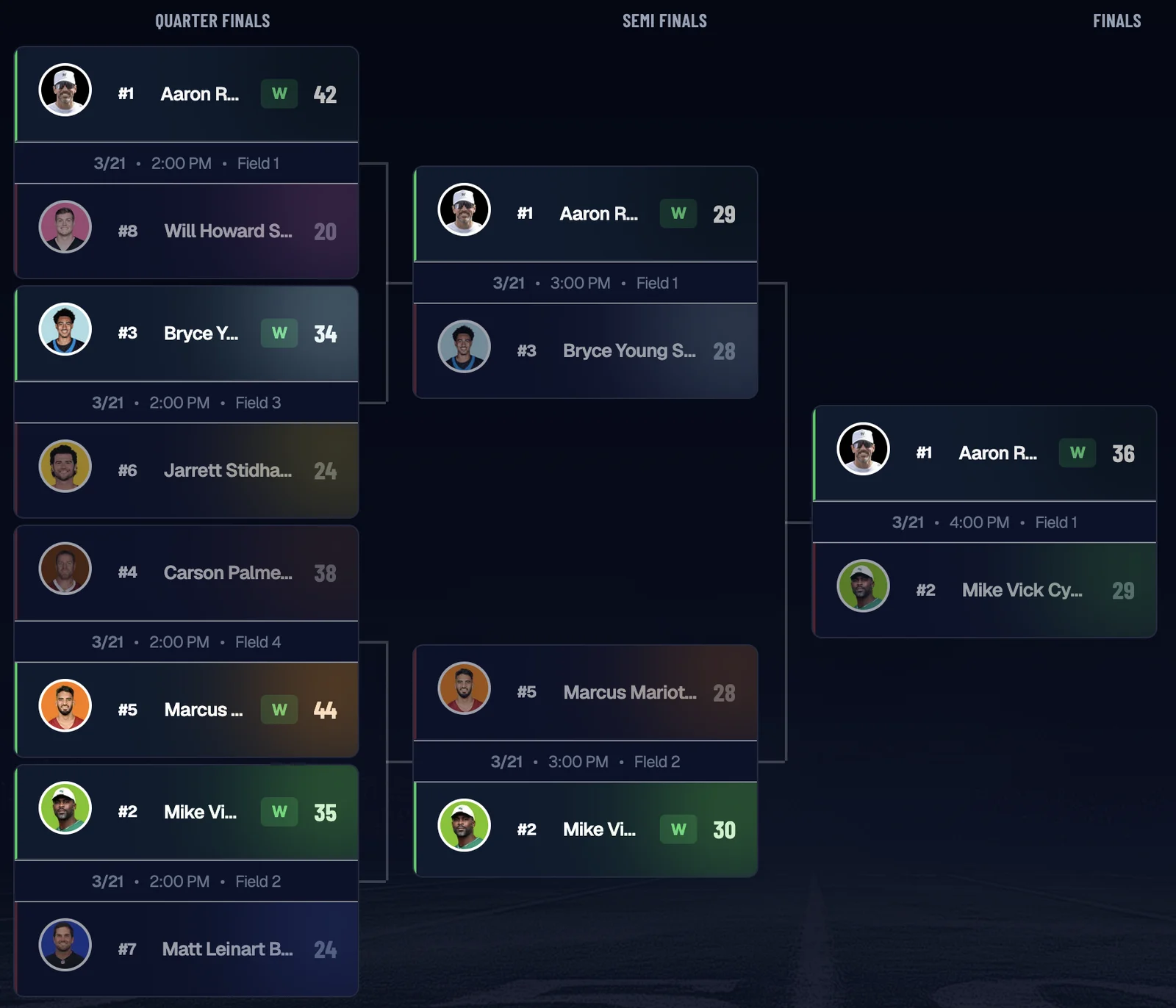
Seeded off pool play. Every winner advances the moment a referee ends the game.
Field count, start and end times, game length, and your tiebreaker rules. The engine drafts a balanced schedule with rest windows between games. Drag any upcoming game to a different slot and the grid re-checks conflicts as you go. Games already played or in progress are locked, so a rain delay never rewrites your results.
| Time | Field 1 | Field 2 | Field 3 |
|---|---|---|---|
| 9:00 am | Hawks vs Gators Final 26 to 12 | Sabers vs Tide Final 19 to 13 | Chiefs vs Pilots Final 20 to 20 |
| 9:50 am | Grit vs Storm Final 14 to 27 | Tide vs Gators Final 18 to 6 | Pilots vs Hawks Final 12 to 31 |
| 10:40 am | Chiefs vs Pilots Live, 2nd half 6:20 | Sabers vs Grit Live, 1st half 3:44 | Storm vs Gators Live, 2nd half 9:02 |
| 11:20 am | Hawks vs Tide Next up | Grit vs Storm Next up | Pilots vs Sabers Next up |
| 12:10 pm | Gators vs Chiefs Rest window honored | Tide vs Storm Rest window honored | Open Buffer slot |
Seeding comes off pool play automatically, and a finished game moves the winner forward while teams are still shaking hands. This is exactly where TourneyMachine breaks down in practice: brackets get rebuilt by hand, printed, and taped to a table, and by noon the paper and the field disagree.
Pick the format when you build the event. Consolation rounds keep every team playing all day.
Pool results feed the bracket using your tiebreaker order. No hand seeding between rounds.
The referee ends a game and the winner is already on the next line, on every phone at the park.
Nothing gets taped to a table and nothing goes stale. The bracket on the screen is the bracket.
When a score lands, the passer, receiver, or rusher gets the credit on the spot. By the time teams reach the parking lot, every player's tournament line is already on their profile.
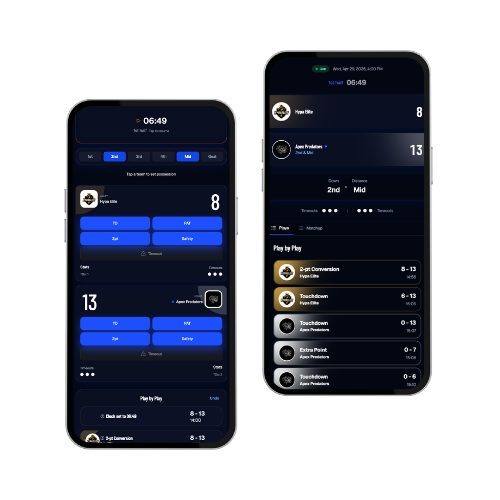
Touchdown, PAT, two point, safety, clock. Six taps run a whole game, and every tap lands on the bracket, the standings, and the player profiles within three seconds.
Works the same on an Apple Watch, gloves on, no signal at the far field.
Every number the event produced, exportable to PDF and CSV, ready for your board or your accountant.
Schedule, results, brackets, and finances export in one click for your board packet.
See which age groups paid for the weekend and which need a different price next year.
Every payment, refund, and payout is timestamped and traceable to a registration.
Teams search the Flag50 finder by date, age group, and drive time. Listing is free, and registration opens straight from your listing.
Tournament pricing is per event. No monthly plan, no contract that outlives the weekend.
One payment per tournament, sized by your field. Not a monthly subscription.
Tournaments are priced per event, never monthly. Run team registration through Flag50 and the platform fee is $20 per team. Keep registration elsewhere and buy a one-time pass: $99 covers up to 20 teams, $299 up to 60, $599 up to 150, and larger events are quoted custom.
An afternoon. You set the fields, divisions, and format, the schedule engine drafts pool play across your fields, and the event can take registrations the same day. There is no implementation call or onboarding queue.
Each referee gets an org-issued scoring code and scores live from a phone or Apple Watch at the field. There are no referee accounts to create or manage, and every score feeds brackets and standings the moment it is entered.
Yes. Pool play standings settle off the referee's live scoring, seeding follows the tiebreaker order you set, and bracket games advance the winner automatically. Results are public on your event page before teams reach the parking lot.
Yes. Teams register per event and pay online, and payouts land in your account after the event. If you already collect registration somewhere else, you can keep it there and run the event on a one-time pass instead.